
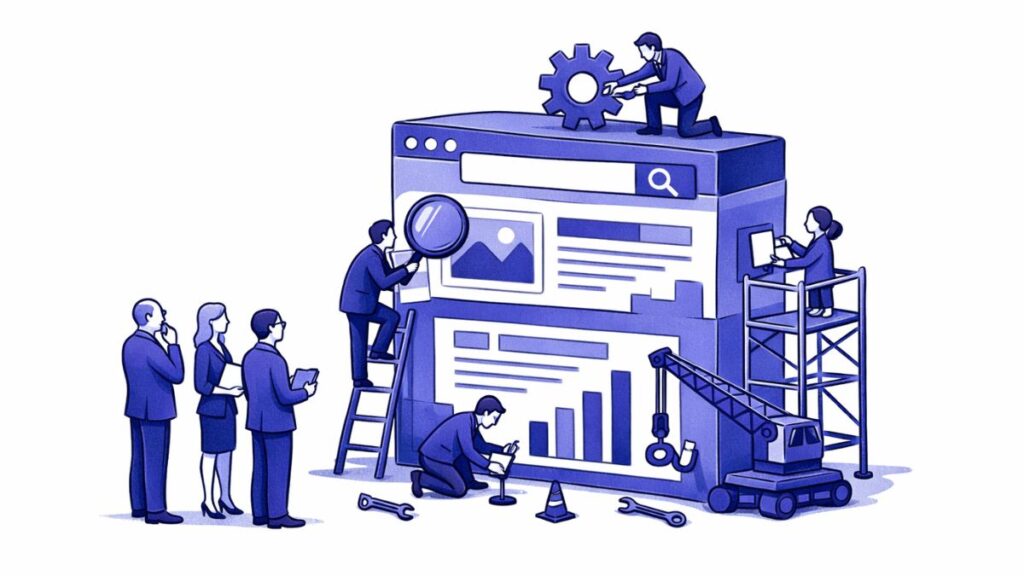
A business website is not only a digital brochure. It is a living search asset: part technical system, part editorial platform, part conversion engine. When executives ask whether SEO belongs inside web design, the practical answer is yes. Search visibility starts long before a page is published, because structure, speed, mobile usability, internal linking, indexability, content depth, and conversion paths are all shaped during design and development. For that reason, comprehensive SEO fundamentals should guide the website blueprint from the first wireframe, not arrive later as a cosmetic patch. This foundation also supports SEO for Google visibility, because every crawlable structure and useful page gives the search engine clearer signals to interpret.
This page explains web SEO from a commercial and informational perspective for companies that want a website capable of attracting qualified traffic, educating prospects, and supporting measurable growth. It covers web design, web development, responsive design, hosting, Core Web Vitals, WordPress, content, tracking, and the business criteria for selecting an SEO-qualified web company. The goal is simple: help decision makers understand how search performance is built into a modern website, one architectural layer at a time.
Is SEO Part of Web Design?
Is SEO part of web design? Yes: SEO is part of web design because search engines and users evaluate the same core experience from different angles. Users need clear navigation, readable content, fast loading, and credible design. Search engines need crawlable structure, descriptive headings, accessible media, internal links, and pages that satisfy the intent behind a query. When those elements are planned together, the website becomes easier to understand, easier to use, and easier to rank.
A search-aware design process includes keyword mapping, page hierarchy, responsive layouts, accessible typography, image optimization, and conversion-focused content placement. In practical terms, SEO should influence menus, URL patterns, content blocks, calls to action, schema opportunities, and the way supporting pages connect with commercial pages. A well-designed page is not just attractive; it helps visitors move from question to decision with fewer dead ends. For deeper page-level planning, review SEO for a website page.
How to Find Web Company Qualified SEO
How to find web company qualified SEO starts with looking beyond portfolio aesthetics. A qualified SEO web company should be able to explain how it plans site architecture, keyword strategy, technical performance, internal linking, analytics, content briefs, schema markup, and conversion paths. It should not sell design and then treat SEO as an optional plugin installed at the end. The company should understand how Google crawls pages, how users search, and how business goals translate into measurable organic demand.
Ask for examples of indexable site structures, Core Web Vitals improvements, content migration plans, and before-and-after organic growth scenarios. A serious provider should also explain what belongs in discovery, what belongs in development, and what should be monitored after launch. If your team is comparing vendors, a guide to the best SEO practices can help you separate strategic partners from template installers. For companies ready to evaluate their website roadmap, it may be time to schedule a strategy consultation.
How Web Design Affects SEO
How web design affects SEO can be seen in five major areas: structure, usability, content visibility, speed, and trust. A beautiful site can underperform if it hides important copy, loads heavy visual assets without optimization, uses confusing navigation, or places valuable pages too far from the homepage. Design choices become SEO choices the moment they influence how search engines crawl a page or how users interact with it.
Good SEO web design helps users understand where they are, what the page offers, and what to do next. It also helps search engines identify the main topic, related entities, supporting sections, and internal relationships across the website. Design systems that include semantic headings, clean templates, mobile-first layouts, and modular content sections usually support better search performance than visually chaotic pages built without a hierarchy. The result is a smoother path from discovery to action.
Is SEO Part of Web Development?
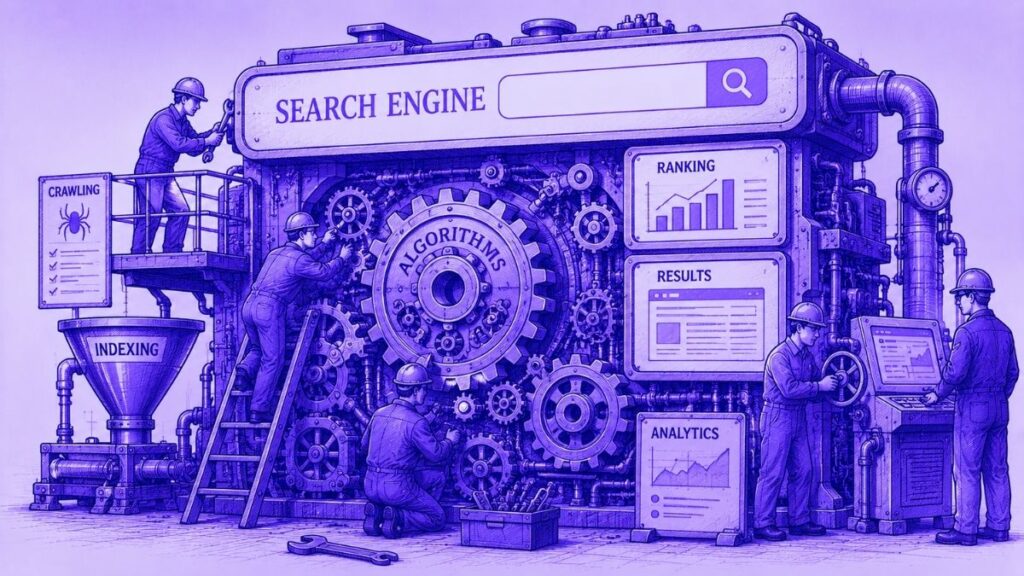
Is SEO part of web development? Yes, because developers control many of the technical conditions that determine whether a website can be crawled, rendered, indexed, and experienced properly. Code quality, server responses, JavaScript rendering, structured data, canonical tags, image delivery, redirects, sitemap behavior, and robots directives all sit inside the development layer. When development ignores SEO, a site can look finished while hiding serious ranking obstacles under the floorboards.
Search-friendly development means pages return the right status codes, templates are not bloated, internal links are accessible, and critical content is not buried behind unnecessary scripts. It also means developers and SEO specialists should collaborate during staging, not after launch. A technical audit can identify indexation problems, performance bottlenecks, and crawl inefficiencies before they become expensive. For a deeper technical foundation, use technical SEO as the operational lens for development decisions.
Why Responsive Web Design Is Good for SEO
Why responsive web design is good for SEO is rooted in user behavior and mobile-first indexing. Most users move between phones, tablets, laptops, and desktops without thinking about screen constraints. A responsive website serves the same essential content and URL while adapting the layout to different devices. That consistency reduces maintenance complexity and helps preserve a unified search signal for each page.
Responsive design also improves readability, navigation, and engagement on mobile devices, where friction can quickly turn into abandonment. A mobile visitor should not need to pinch, zoom, hunt for menus, or wait for oversized images. Because Google recommends responsive design as the easiest mobile setup to implement and maintain, it should be treated as a baseline for modern SEO web design. For businesses operating in competitive markets, responsive performance is no longer a garnish; it is part of the plate.
How Does Web Hosting Affect SEO?
How does web hosting affect SEO? Hosting can influence loading speed, uptime, security, server response time, scalability, and the reliability of the user experience. A slow or unstable host does not automatically doom a website, but it can make every other SEO effort work harder. If pages frequently load slowly, fail under traffic, or produce server errors, users lose patience and search engines receive weaker quality signals.
Good hosting supports fast time to first byte, dependable uptime, HTTPS, efficient caching, content delivery options, and enough resources for the website’s traffic profile. For international or national SEO, infrastructure should match the audience and business model. A small local website may need a different hosting setup than an editorial site publishing hundreds of pages. Hosting is not a magic ranking lever, but it is the foundation that keeps the web SEO machinery from rattling apart.

Cómo hacer SEO

Mejor estrategia SEO

SEO en Google

SEO para mi negocio

SEO en Wordpress

Mejores herramientas SEO

SEO con Yoast
Aprende a hacer SEO

Estrategias SEO y SEM

SEO en Marketing

SEO para empresas

SEO keywords

Optimización en motores de búsqueda en México

Search Engine Optimization

Servicios profesionales de SEO
Precios SEO

Especialista SEO

Marketing en buscadores

Creación de contenido SEO
Do Core Web Vitals Matter for SEO?
Do Core Web Vitals matter for SEO? Yes, Core Web Vitals matter because they measure real-world user experience around loading performance, interactivity, and visual stability. They are not the only ranking consideration, and excellent scores do not guarantee top rankings by themselves. Still, weak Core Web Vitals can signal that a page is frustrating, slow, unstable, or hard to use, especially on mobile devices.
For business websites, Core Web Vitals are useful because they turn vague performance complaints into measurable priorities. Instead of saying “the site feels slow,” teams can evaluate specific metrics and decide whether images, scripts, fonts, layout shifts, or server response time need improvement. These metrics become especially important when competitors offer similar information, products, or services. In that situation, a faster and more stable page can protect revenue that would otherwise leak away in silence.
How to Do SEO Web Design and Development
How to do SEO web design and development begins with shared planning between strategy, design, content, and engineering teams. Start with search intent, keyword research, audience questions, and business priorities. Then translate those findings into a page map, URL architecture, content hierarchy, and conversion plan. This keeps the website from becoming a pile of attractive screens with no search logic connecting them.
The next step is execution: build responsive templates, write descriptive headings, compress and size images, create crawlable internal links, prepare metadata, configure analytics, test performance, and validate indexation before launch. After publishing, track rankings, clicks, conversions, Core Web Vitals, and content gaps. Teams that need a practical sequence can use how to do SEO as a process reference and combine it with broader SEO strategies for long-term growth.
How To: SEO Web Design
How to: SEO web design means building each page with a clear search purpose. Every important page should answer one primary intent, support related subtopics, and guide the visitor toward a logical next action. The design should make the main topic obvious through the H1, the H2 structure, introductory copy, visual hierarchy, and internal links. If a user cannot understand the value of the page within seconds, the design is probably hiding the SEO strategy rather than expressing it.
A strong SEO web design workflow also includes editorial rules for templates: readable line length, accessible contrast, clean buttons, concise labels, descriptive anchor text, and content sections that can be expanded without breaking the layout. Search performance does not require dull design. It requires design that respects information architecture. The best pages feel polished, but they also behave like well-labeled libraries where every shelf tells the visitor exactly what can be found there.
How Can SEO Increase Web Traffic?
How can SEO increase web traffic? SEO increases web traffic by making a website more visible for the searches that matter to the business. This includes informational queries from early-stage users, commercial queries from comparison-stage buyers, and transactional queries from people ready to contact, book, purchase, or request a quote. The more accurately a site answers these search intents, the more opportunities it creates to earn qualified organic visits.
Traffic growth comes from a blend of keyword research, content depth, internal linking, technical optimization, authority building, and measurement. A page about a service may attract commercial traffic, while supporting guides can answer questions and bring users into the funnel earlier. For a stronger editorial engine, align SEO keyword research with SEO content so each page has a job, a search audience, and a place in the broader website structure.
What Does SEO Stand for in Web Design and Development?
What does SEO stand for in web design and development? SEO stands for Search Engine Optimization. In the context of web design and development, it refers to the practice of building and improving a website so search engines can understand it and users can benefit from it. The acronym is simple, but the execution touches strategy, content, code, performance, user experience, and analytics.
For a designer, SEO may mean designing pages that communicate value clearly and support content hierarchy. For a developer, SEO may mean writing efficient code, controlling indexation, and protecting performance. For a business owner, SEO means creating a website that can attract demand without depending only on paid media. The most useful definition is operational: SEO is the discipline that turns a website into a discoverable, understandable, and commercially useful digital asset.
Does Core Web Vitals Affect SEO?
Does Core Web Vitals affect SEO? In plain business language, Core Web Vitals can affect SEO because Google uses them as part of its broader page experience systems. However, they should be interpreted correctly. A site with strong content, relevant authority, and clear search intent can still outperform a faster but shallow competitor. At the same time, poor page experience can weaken performance when users bounce, struggle, or abandon the page before engaging.
The practical recommendation is not to obsess over scores in isolation. Instead, use them to prioritize improvements that also help visitors: faster loading, more stable layouts, smoother interaction, cleaner templates, better image delivery, and reduced script bloat. When Core Web Vitals improvements support clearer content and better conversion, they become more than a technical checklist. They become part of a broader digital SEO strategy.
What Is SEO in Web Design?
What is SEO in web design? It is the practice of designing a website so that its visual experience, content structure, and navigation support organic visibility. This includes the way the homepage introduces the brand, how service pages explain value, how blog or guide pages answer questions, and how internal links move authority and context across the site. In short, SEO in web design is the translation of search strategy into visual and structural decisions.
A designer who understands SEO thinks about more than colors and spacing. They consider whether the H1 is clear, whether sections match user questions, whether CTAs appear at the right moments, whether images are optimized, and whether the page can be expanded as the content strategy matures. For WordPress projects, design and search visibility often meet through theme choices, plugins, and templates, which makes WordPress SEO an important planning topic.
How to Track Core Web Vitals for SEO Success
How to track Core Web Vitals for SEO success starts with combining field data and lab diagnostics. Field data reflects real user experience, while lab tools help teams reproduce and diagnose problems in controlled conditions. Google Search Console, PageSpeed Insights, Lighthouse, and Chrome UX Report can all help identify whether users experience slow loading, delayed interaction, or unexpected layout movement.
Tracking should lead to decisions, not dashboard decoration. If a template performs poorly, review image dimensions, scripts, fonts, third-party tags, server response, caching, and layout stability. If only some URLs fail, compare page types and assets. For ongoing work, connect performance monitoring with SEO tools, analytics, rankings, and conversion data. The strongest SEO teams treat Core Web Vitals as an early warning system for user friction.
What Is SEO in Web Development?
What is SEO in web development? It is the technical practice of building a website so that search engines can crawl, render, index, and evaluate its pages efficiently. It includes clean code, logical templates, structured data, secure protocols, optimized assets, redirect management, XML sitemaps, robots.txt rules, canonical tags, and accessible internal linking. Development makes the website visible to machines while design makes it usable for humans.
In commercial projects, SEO development also protects investment during redesigns and migrations. A careless relaunch can erase rankings if URLs change without redirects, metadata disappears, pages are accidentally blocked, or content is removed without a replacement plan. For WordPress websites, tools such as Yoast SEO configuration can support metadata, canonical settings, and sitemaps, but they cannot replace thoughtful architecture and disciplined development.
What Is Web SEO?
SEO is the complete practice of making a website more visible, useful, technically reliable, and commercially effective through search engines. It brings together keyword strategy, web design, web development, content creation, technical SEO, analytics, internal linking, and conversion optimization. Instead of treating SEO as a single tactic, web SEO treats the website as an ecosystem.
For companies, web SEO should connect business goals with search demand. That means identifying what customers ask, building pages that answer those questions, creating commercial pathways, optimizing technical performance, and measuring results over time. A company can improve visibility with SEO marketing, strengthen market relevance with SEO in Mexico, and define the right investment by reviewing SEO pricing and investment.
Web SEO for Companies: From Information Architecture to Revenue
A business website should not force visitors to solve a maze before they find value. Web SEO for companies aligns pages with commercial intent, informational intent, and the buyer journey. Service pages should explain what the company does, comparison pages should help users evaluate options, content pages should answer high-intent questions, and contact paths should make the next step obvious. This is how organic traffic becomes business opportunity rather than vanity traffic.
For decision makers, the essential question is not whether SEO belongs to design, development, or marketing. It belongs to all three. The best results appear when the website is planned as a coordinated system: search strategy defines demand, UX organizes the journey, development protects performance, and content earns relevance. Companies that want a stronger organic channel can explore SEO for companies, choose a professional SEO service, and continue to optimize SEO performance after launch.
Takeaway for SEO Web Design and Development
SEO web design and development work best when they are treated as one operating system. Design shapes clarity. Development shapes access and speed. Content shapes relevance. Technical SEO shapes crawlability. Analytics shapes improvement. When these disciplines work together, the website stops acting like a static brochure and starts behaving like a search-driven growth platform.
The strongest editorial position is clear: web SEO is not an accessory. It is the method for building websites that can be discovered, understood, trusted, and used by real buyers. A company that integrates SEO from the beginning will usually spend less time repairing avoidable mistakes and more time compounding organic visibility. That is the quiet power of search-first web design: the architecture keeps working after the meeting ends.